Wednesday, 21 March 2018

Outrage as woman is refused entrance into Central Bank of Nigeria, Abuja for wearing this...


Social media users have expressed outage after a senior manager of an international organization was refused entrance into the Central Bank of Nigeria for wearing the dress in the above photo.

The woman went to Abuja from Lagos solely for a meeting at CBN but when she got there, the security receptionist refused to grant her entrance because, according to them, what she was wearing was very short.

Social media users are wondering why such a dress should be frowned at for a corporate meeting in a place that isn't a religious setting.


When I become the president of Nigeria, every youth corper's allowance will be N50k monthly - Omoyele Sowore


Sahara reporters publisher, Omoyele Sowore continues his campaign promises ahead of the 2019 presidential elections and this time he says, 'If You're A Youth Corps Member ("Corper") And You Agree To Serve Anywhere In Nigeria You're Posted Your Take Home Allowance Will Be N50,000 starting From May 29, 2019, When I Become The President of The Federal Republic of Nigeria'.


He added that, 'It Will Be A New Day For The SHORTCHANGED Youths Of Nigeria. If Former Oil Minister Diezani And Her Cohorts Could Steal Over $2 billion For Themselves, Youth Corp Members Deserve Decent Renuemeration. Corpers Serving In Volatile States (Borno, Bayelsa, Rivers, Yobe, Zamfara, Benue, Plateau) Will Get Life Insurance Worth N10million In Case Anything Untowards Happen To Them. You All Are On Our Mind'.


Sowore also said, 'do You Know That Over 30,000 Niger Delta militants in the Federal “Amnesty Programme” Receive N135,00 per month? They get N65,000 as “Bush Allowance” and N70,000 as “Feeding Allowance”. This is separate from school fees in private schools and foreign universities, air tickets in addition to looting. The costs are ginormous to the extent that President Buhari had to fire PAUL Boroh a few days ago. Nigeria Can Certainly Afford N50,000 as starting “allawee” for its corp members. They deserve decent bush and feeding allowances too!'.

Senator Wakili's wife found him slumped on the floor –Bauchi Rep


A member of House of Representatives, Mr. Mohammed Sani-Abdu, on Tuesday gave the first vivid account of how the late Senator Ali Wakili died.

Wakili, who died on Saturday morning at the age of 58 in his Abuja residence, represented Bauchi-South Senatorial District of Bauchi State.

Sani-Abdu, who is also from Bauchi State, recounted Wakili’s very last moments when the House paid tributes to the late retired Comptroller of Customs.

The session was presided over by the Speaker, Mr. Yakubu Dogara, who hails from the same district as Sani-Abdu and Wakili.

Sani-Abdu said that as the very first person to arrive in Wakili’s residence after receiving a distress call, he could authoritatively reveal that Wakili slumped in the presence of his wife.

According to him, Wakili had got dressed and ready to travel to Yola, Adamawa State, to attend the wedding of the daughter of the Secretary to the Government of the Federation, Mr. Boss Mustapha.

But, before leaving the house, Sani-Abdu said, the late senator asked his wife to prepare a meal for him to eat.

He spoke further, “This is why we have to continue to appreciate our wives. His wife received the first shock.

“She prepared porridge and brought it for him to eat. But Wakili told her he wanted something light instead, like tea.

“She went back to get the tea, only for her to return and find her husband slumped on the floor.”

Sani-Abdu recalled how he personally washed the late senator and prepared his body for burial, having been told what happened.

He added, “The wife is a very courageous woman. I asked her whether she would be strong enough so that I could remove the cloth from his face for her to see the husband for the last time.

“She agreed. You know, people are somehow afraid of dead bodies. But, this woman did not only hold her husband, she prayed for him and tightly embraced the body.

“She did not want to let go of the body. It took some women, who had strength, to pull her away from Wakili.

“Immediately she was separated from him, she fainted and people had to bring water to pour on her. She took the first shock.”

Dogara had opened the session by recalling the good deeds of Wakili, including his courage as a politician, to challenge the political class in the state for taking decisions that did not serve the interests of the majority.

The Speaker said, “He fought for good governance, especially in our dear state of Bauchi, and Nigeria at large.

“Merchants and profiteers of bad governance had the knives all out for him, but never to be intimidated, he stood his ground and held the lines with rare courage until his death. He represented an idea that death cannot kill.”

A former customs officer, Mr. Jerry Alagbaso, who was Wakili’s contemporary in service, described the late senator as “a jolly good and resourceful officer while he was in the service.”

A member from Jigawa State, Mr. Mohammed Gudaji-Kazaure, said he learnt from Wakili the lesson that those fighting for political positions ahead of 2019 might not live to see the year.

“We were very close. He told me that people were fighting because of 2019 elections, but who would say with confidence that they would see 2019?

“He was not desperate about positions and this is a lesson for all of us.”

On his part, another retired customs officer, Mr. Albert Adeogun, said, “It is not possible in a moment to describe the person of late senator Wakili.

“I pray God to grant his family the fortitude to bear the loss.”

The House observed a minute’s silence in his honour and later shut the plenary till Wednesday after praying for Wakili’ soul.

Nigerian military alerted before Dapchi abduction, says Amnesty


Nigeria’s military was on Tuesday accused of ignoring repeated warnings about the movements of Boko Haram fighters before they kidnapped 110 schoolgirls in the country’s restive northeast.

The students — the youngest of whom is aged just 10 — were seized from the town of Dapchi, Yobe state, on February 19 in virtually identical circumstances to those in Chibok in 2014.

Then, more than 200 schoolgirls were taken in an attack that brought sustained world attention on the Islamist insurgency and sparked a global campaign for their release.

President Muhammadu Buhari has called the Dapchi abduction a “national disaster” and vowed to use negotiation rather than force to secure their release.

But as in Chibok nearly four years ago, human rights group Amnesty International claimed the military was warned about the arrival of the heavily-armed jihadists — yet failed to act.

In the hours that followed both attacks, the authorities also tried to claim the girls had not been abducted.

Amnesty’s Nigeria director Osa Ojigho said “no lessons appear to have been learned” from Chibok and called for an immediate probe into what she called “inexcusable security lapses”.

“The government’s failure in this incident must be investigated and the findings made public — and it is absolutely crucial that any investigation focuses on the root causes,” she added.

“Why were insufficient troops available? Why was it decided to withdraw troops? What measures have the government taken to protect schools in northeast Nigeria?

“And what procedures are supposed to be followed in response to an attempted abduction?”

There was no immediate response from the Nigerian military when contacted by AFP.

– Multiple calls –

Amnesty said that between 2:00 pm and 6:00 pm on February 19, at least five calls were made to tell the security services that Islamist fighters were in the Dapchi area.

Locals spotted about 50 members of the Islamic State group affiliate in a convoy of nine vehicles in Futchimiram, about 30 kilometres (19 miles) from Dapchi, then at Gumsa.

In Gumsa, where Boko Haram stayed until about 5:00 pm, residents phoned ahead to Dapchi to warn them. The convoy arrived at about 6:30 pm and left about 90 minutes later.

Amnesty, whose researchers spoke to about 23 people and three security officials, said the army command in Geidam had told callers they were aware of the situation and were monitoring.

Police in Dapchi promised to tell divisional commanders, while army commanders in Geidam and Damaturu were also alerted during the attack, it added.

People in Dapchi have previously said troops were withdrawn from the town earlier this year, leaving only a few police officers. The nearest military detachment was an hour away.

The Dapchi abduction has thrown into doubt repeated government and military claims that Boko Haram is on the brink of defeat, after nearly nine years of fighting and at least 20,000 deaths.

Boko Haram, which has used kidnapping as a weapon of war during the conflict, has not claimed responsibility but it is believed a faction headed by Abu Mus’ab al-Barnawi is behind it.

IS in August 2015 publicly backed Barnawi as the leader of Boko Haram, or Islamic State West Africa Province, over Abubakar Shekau, whose supporters carried out the Chibok abduction.

Analysts have attributed a financial motive to the Dapchi kidnapping given government ransom payments made to Boko Haram to secure the release of some of the captives from Chibok.

I always believe nobody is better than me, says Ronaldo


Cristiano Ronaldo says the key to his staggering success is believing nobody is better than he is — and he advised his Portuguese teammates to adopt the same attitude.

The Real Madrid star made the comments as he accepted the Portuguese player of the year award in Lisbon.

“We should always believe we are the best,” said Ronaldo, who led Portugal to the Euro 2016 title and who is now turning his gaze to the 2018 World Cup.

“You need to think big. I always believe that nobody is better than me, out on the pitch at least,” he said.

“On a personal and collective level I have had a dream year. I won five trophies (Champions League, UEFA Supercup, World Club Cup, Spanish league title and the Spanish Supercup), the Ballon D’Or and the FIFA ‘Best’ title.”

Ronaldo, who has been voted Ballon D’Or winner five times, is currently in Lisbon with the Portugal squad who play fellow World Cup qualifiers Egypt on Friday and the Netherlands three days later.

The 33-year-old has scored 79 goals in 147 games for Portugal and will lead the reigning European Champions to the 2018 World Cup, fitness permitting, where they will face Spain, Morocco and Iran in the first round.

Tuesday, 20 March 2018

Everybody thinks it is only boys who join gangs


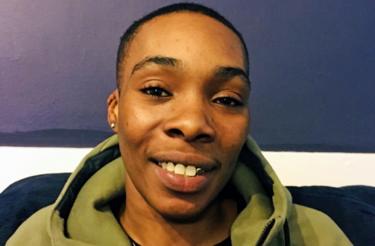
Nequela Whittaker was once a feared gang leader in south London. Now she's a youth worker on those same streets, writes Jo Morris, and she wants her story to be heard by young people who might be tempted by gang life - especially girls.

"'Mouthy,' that was my street name."

It's what they used to call Nequela Whittaker. She earned the name as a teenager for her cocky manner and habit of getting into fights.

"I would really know how to humiliate or wind people up," she says. "My reputation for fighting was well-known. I loved conflict for a long time."

By the time she was 14, Whittaker had been arrested for actual bodily harm (ABH) and grievous bodily harm (GBH).

"I was savage," she says.

"I've seen friends murdered, people injured. Mass brawls. Stabbings. Shoot-outs happening in front of me.

"You have people who follow you - you have a crew. You go to any lengths - robbery, kicking in people's front doors."

As the years went by she found it increasingly troubling, she says, but that world is difficult to escape.

"Once you're in it, you're in it. You've got to think how your peers will take you saying, 'I feel regret. It's not me.'"

As a young girl growing up in Clapham with her mum and older siblings, Whittaker was a normal law-abiding child.

Her mum wanted her to take advantage of every opportunity, so she played the violin, did drama and athletics - but Whittaker says that made her stick out.

"I was different, and back then different wasn't cool."

A long bus journey to her school in Croydon made her a target for a group of girls from another school, who picked on and humiliated her.

"They called me 'nerd', 'hairy legs'. They made fun of my violin, they dissed my shoes, cussing my attire - it was no fault of my own, it was what my mum could afford."

Talking about this still upsets her.

For more than a year Whittaker ignored the girls, until finally she reached a tipping point.

"I decided there were two types of people in this world - people who take all the stuff that's thrown at them and people who don't. I didn't want to be that person who always got picked on every day."

She started using the money her mum gave her for violin lessons to buy cannabis to sell at school. And she formed a gang of girls.

"The switch just came, and I became the aggressor: 'Let's go and get these girls now.'"

Her gang beat up two of the girls from the other school.

"I went for one friend in one week and the other friend the next week. We battered her. It was for the humiliation I had been feeling so long."

What did that feel like? "Power," she says.

"It was like: 'OK, I am somebody now. My voice has been heard. The streets are awake. They're listening.'

"I went from being the black sheep to the head of the throne. It gave me a sense of belonging that I had been looking for."
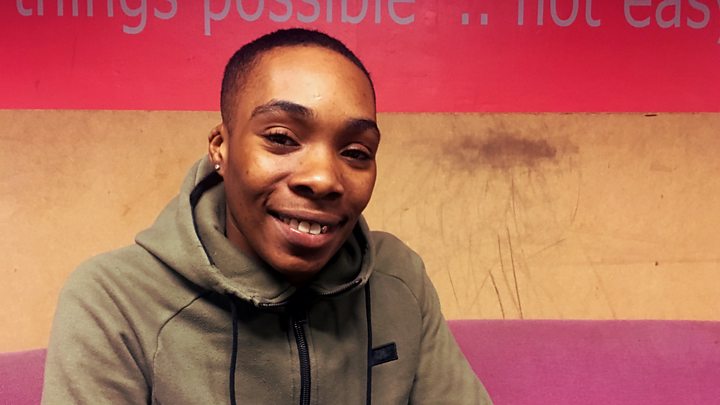


Whittaker thinks the need to belong is one factor that drives young people to join gangs - and it certainly was in her case.

Her father had left the family when she was only two years old.

"My dad's a crack addict. Lovely guy, but everyone has something that they love in life and unfortunately his addiction is drugs," she says.

And as a young gay woman she never felt completely accepted by her mother.

"My mum is a wonderful woman, but she's old-school and she was bringing quite a lot of her traditional Caribbean ways, and I didn't feel like I belonged in that setting for many years because of my sexuality.

"For many years I didn't feel listened to."

When Whittaker was out of sight, her mum had no idea what she was doing.

"Back home I was sweet and innocent, but on the streets I was this horrible little girl," she says.

"My mum would think I was going to school playing the violin. I wore a very good disguise."

Whittaker was arrested for beating up the two girls and received a youth offending referral.

After that, there was no turning back.

"I figured: 'I have a criminal record, might as well make it as long as possible.'"

She quickly became what is known on the streets as a "10-star general".

"Beating people up, weapons, guns, humiliation - making a boy or girl walk down the street naked. It got worse before I calmed down," she says.

She started selling crack and cocaine outside London, running what's called the "country lines". Gangs often use girls because police stop them less often.

"I was selling heavily in Scotland. Glasgow, Birmingham, all over Britain," she says.

Eventually she was arrested in Scotland and charged with misuse of drugs with intent to supply Class A and B.


She was 17 when she was sentenced to four years in a Scottish prison - a long way from south London and way out of her comfort zone.

How did she feel on her first night?

"Petrified. I was petrified. Not being near anyone I knew and so far from home. When I arrived, my room was like a dark cave, and a girl was sitting on the bottom bunk, rocking. My tears hit the ground and I said: 'I can't do this.'"

The prison officer allowed her to make a phone call.

"I phoned my mum and said: 'I can't do this.' I was crying, and she said: 'Yes you can. You put yourself in this situation. Only you can get yourself out of it. Chin up. You've got this.'"

And her mum turned out to be right.

Whittaker says her time inside was the best period of her life.

She discovered that she had a knack for listening, and that other inmates trusted her with their problems.

"I found a role - I gave advice. I supported girls," she says.

She went from selling drugs to unofficially counselling girls with addiction problems.

"I reconnected with the girl I was before I made the wrong decisions."

Her transformation earned her a new nickname. "Mouthy" became "Wisey".

She says being in jail gave her "time to see where I wanted to place myself in the real world". But this wouldn't have happened, she says, if she had been jailed in London.

"I would have been in the same environment, fighting for my reputation. That ego overrides everything."


In 2009, at the age of 20, she left prison. Nine years later she has a social science degree, lives with her mum and works at a youth club in south London. There, she is always on the lookout for girls like her former self, at risk of getting into gangs.

"Everybody thinks it's only boys involved in gangs but it is not," she says. "The community needs to help guide females as much as males."

She acknowledges that women are often sexually exploited by male gangs, but in some cases, she says, girls can hold as much power as boys.

I meet her at the youth club - where this evening she is running a girl's night.

Before the session starts she talks to a 15-year-old girl, who has been in trouble for fighting.

Whittaker is reminded of herself at that age - so much energy, but channelled the wrong way.

"Trouble finds me," says the teenager, who has been seeing Whittaker for a year to help with anger management.

"She understands me," she says. "Other people think they understand me."

Where does she think she'd be if she hadn't met Whittaker?

"I'd probably be sitting down at the police station: 'Why did you have a fight? Why did you attempt to stab someone?'"

It makes a difference knowing Whittaker has lived the life.

"They see me as 'Niks from the street' - I'm not badgering, I'm not the police, I'm not social services. They have more trust in someone who has gone through it," Whittaker says.

"I have a real knowledge of the world that they're from. Many parents don't understand what it's like for their young people. They don't see what's happening on the streets, when they leave their front door.

"For me, it's about showing them: 'I'm interested in your world.'"

Whittaker wishes she'd met someone like herself when she was a teenager to challenge the decisions she was making.

I leave her preparing a meal for 20 young people who will be relying on the evening's youth club for their dinner.

"It's a big thing, to go from being part of the problem to now being part of the solution," she says.

Children drawing more women in science


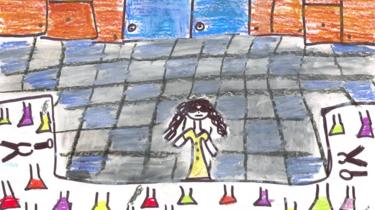
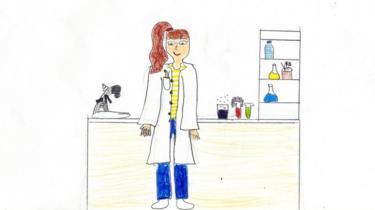
Children in the US are drawing more women scientists than in previous decades, according to a new study.

The "Draw A Scientist" test has been administered by sociologists in various studies since the 1960s.

Researchers at Northwestern University, US, analysed five decades of the test.

When asked to draw a scientist, less than one per cent of children in the 1960s and 1970s drew a woman. This rose to 28% between the 1980s and present day.

However, children are still far more likely to draw a traditionally male figure when asked to depict a scientist.

"The effect ... increased over age as children became more connected to their world and became more aware of the male dominance of science," Prof Alice Eagly, a co-author on the study, told BBC News.

"The fact that children are still drawing more male than female scientists reflects their environment," said David Miller, the study's lead author. "Given the underrepresentation of women we observe in several science fields, we shouldn't except equal numbers. Encouragingly though, we can see that children's stereotypes change over time."

Despite women's representation in science improving significantly since the 1960s, girls draw on average 58% of scientists as men, with boys drawing 96%.

Yet, the study highlights, by 2013 women were 49% of biological scientists, 35% of chemists, and 11% of physicists and astronomers in the United States.

Bianca Reinisch of the Free University of Berlin, who was not involved in the study, cautions that the way in which children are prompted to draw for the study may also be changing.

"Although it is true that studies make use of the prompt "Draw a scientist,", there are differences in the setting of the assessments and even variations of the prompt," she explained. Children's responses could be influenced by posters visible in the room or the way in which the task is phrased to them.

Prof Eagly points out that the exercise is not perfect, yet it is a useful indirect measure as it can encourage children to share their thoughts and ideas on a topic without realising they are being tested.

The authors suggest that media stereotypes play a significant role in children's images of scientists as they get older. Where it was possible to determine detailed characteristics, many of the scientists in the drawings wore lab coats and glasses. On average, 79% were Caucasian.

It is also notable that the the test requires figures to be indentified as one of two genders. Although the Northwestern analysis factors in figures of "indeterminate" gender, Bianca Reinisch considers that some earlier studies may have been "forced" to choose between the categories of men and women when assessing the pictures.

When children in one study were also asked to draw a teacher, only a quarter drew men, suggesting that gender stereotypes persist across other professions.

Facebook value drops by $37bn amid privacy backlash


Facebook's shares have fallen sharply, wiping $37bn off the firm's value, as it faces questions from US and UK politicians about its privacy rules.

The social network is under fire after reports on how Cambridge Analytica, which some believe helped Donald Trump win the US election, acquired and used Facebook's customer information.

Theresa May's spokesman called the allegations "very concerning".

The UK data protection body is seeking a warrant to search the firm's offices.

Information Commissioner Elizabeth Denham says it will be used to look at the databases and servers used by British data analytics firm Cambridge Analytica.

Facebook shares ended trading 6.7% lower at $172.56, wiping almost $37bn off the social network's market value.

The company is accused of failing to properly inform users that their profile information may have been obtained and kept by Cambridge Analytica, a political consulting firm.

"The lid is being opened on the black box of Facebook's data practices, and the picture is not pretty," said Frank Pasquale, a University of Maryland law professor.


On Friday, Facebook suspended the consulting firm, saying it had acquired data from a researcher who violated the firm's policies.


Asked about the reports, the prime minister's spokesman said: "The allegations are clearly very concerning.

"It is essential that people can have confidence that their personal data will be protected and used in an appropriate way."

US senators Amy Klobuchar, a Democrat, and John Kennedy, a Republican, have also called for a hearing about data security and said they want to question Facebook chief executive Mark Zuckerberg, and the heads of other tech companies.

"While Facebook has pledged to enforce its policies to protect people's information, questions remain as to whether those policies are sufficient and whether Congress should take action to protect people's private information," they wrote in the letter.

"The lack of oversight on how data is stored and how political advertisements are sold raises concerns about the integrity of American elections as well as privacy rights."

Alexander Nix, chief executive of Cambridge Analytica, was questioned by a Parliamentary committee last month about using data to target messages.


Monday, 19 March 2018

Cenderella Nana: Divorce Party Of Egyptian Woman Got People Talking

A beautiful U.S.-based Egyptian woman decided to celebrate the end of her problematic marriage in the most savage way one could ever think of, has got herself trending on Facebook.

According to the woman, Cenderella Nana, she uploaded videos of a huge 'divorce party' she hosted after she parted ways with her husband. 

See captioned the video;

"My divorce party, thank God. One of the best days of my life."

In the footage, she is seen wearing a white dress, dancing, and cutting a divorce cake. Given that divorced Arab women often face stigma and harsh judgements, Nana was hailed by many as a ground breaker.

However, she got lots of hate in the comments left by people who are not happy by her decision under her post, but has since hit back in several Facebook posts and live streams. There are also some who are happy for what she did.


INTIMATE PARTNER VIOLENCE: THE ABUSERS AND THE KIND OF VICTIMS THEY SEEK.

The problem with domestic violence is real. Gender socialization continues to play a major role in this matter. Men are trained to be st...